
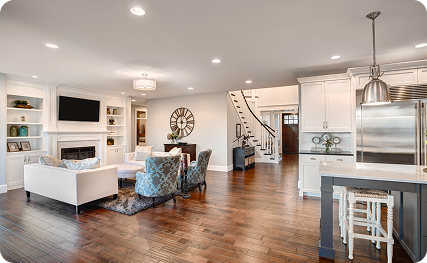
The floor you choose for a room plays a huge part in how you experience the space, and because flooring covers one of the largest surface areas in any renovation, it sets the tone for everything else. It's also a decision people often rush, then regret. So here's a plain-English guide to the main flooring options available in 2026, where each one shines, and the trade-offs to weigh before you commit.
Engineered timber
Engineered timber is real timber, a genuine hardwood top layer bonded to a stable plywood or composite base. That construction makes it far more stable than solid timber in Australian conditions, so it copes better with humidity and temperature swings and can often be laid over a concrete slab.
Pros: it's the real thing, so it brings genuine warmth, character and resale value; depending on the thickness of the top layer, it can sometimes be sanded back and refinished down the track. Cons: it costs more than the look-alike options, and like all timber it still needs some care around water and won't love a flooded bathroom.
Hybrid flooring
Hybrid has become one of Australia's most popular floors, and for good reason: it combines the waterproof core of vinyl with a tough, realistic timber-look wear layer. It's the practical all-rounder.
Pros: genuinely waterproof, very durable, comfortable underfoot, and brilliant for busy family homes, kitchens and living areas; easy to clean and hard to damage. Cons: it's a look-alike rather than real timber, so it won't add the same premium feel or the same value as the genuine article, but for sheer livability it's hard to beat.
Laminate
Modern laminate has come a long way. Advances in printing and texturing mean today's laminate mimics real timber convincingly at a noticeably lower price point, which has driven a real comeback.
Pros: affordable, hard-wearing against scratches and dents, and straightforward to install. Cons: it's not as waterproof as hybrid (water sitting in the joins can cause swelling), and it can't be sanded or refinished, when it wears out, it's replaced.
Tiles (porcelain and ceramic)
Tiles are the natural choice for wet areas and a strong all-round option in Queensland's warm climate.
Pros: fully waterproof, extremely durable, cool underfoot through a Brisbane summer, and available in an enormous range of looks including large-format and convincing stone-look finishes. Cons: hard and cold underfoot in winter (underfloor heating solves this beautifully if the budget allows), and the grout needs occasional attention to stay looking good.
Carpet
Carpet has largely disappeared from open-plan living and kitchen areas, but it remains ideal where warmth and quiet matter most.
Pros: warm, soft and sound-absorbing, perfect for bedrooms, especially in homes with kids. Cons: not suited to wet or high-traffic zones, and it shows wear and staining over time.
A few 2026 pointers worth knowing
Beyond the material itself, a few current shifts are worth keeping in mind so your floor reads as contemporary rather than dated:
- Matte and satin finishes have replaced gloss almost everywhere. Gloss shows every footprint, scratch and speck of dust, and it clashes with the natural, lived-in direction of current interiors. Matte hides daily wear, looks better for longer, and photographs better too. This is a permanent shift, not a passing fad.
- Wide boards now read as modern. Boards in the 180mm-and-up range have moved from premium option to mainstream choice; they make rooms feel larger and reduce the number of visible joins. Narrow boards can look dated by comparison.
- Warm tones are back; cool blue-greys have dated. If you renovated between 2015 and 2020 with cool grey floors, you're exactly who the market is now steering toward warmer, more nuanced neutrals.
- Flow the same floor inside and out. Carrying one flooring look from the living area through to the deck or patio is a popular way to connect spaces and make a home feel larger, very much in keeping with the indoor-outdoor living Queenslanders love.
So which should you choose?
There's no single right answer, it depends on the room, the foot traffic, your climate exposure and your budget. As a rough guide: tiles or hybrid for wet and high-traffic zones, engineered timber where you want warmth and value, laminate when budget leads, and carpet for bedrooms. The smartest approach is often to mix: the right floor for each room rather than one compromise throughout.
If you'd like a hand matching the right floor to each space in your renovation, get in touch, we're happy to talk it through before you commit.